




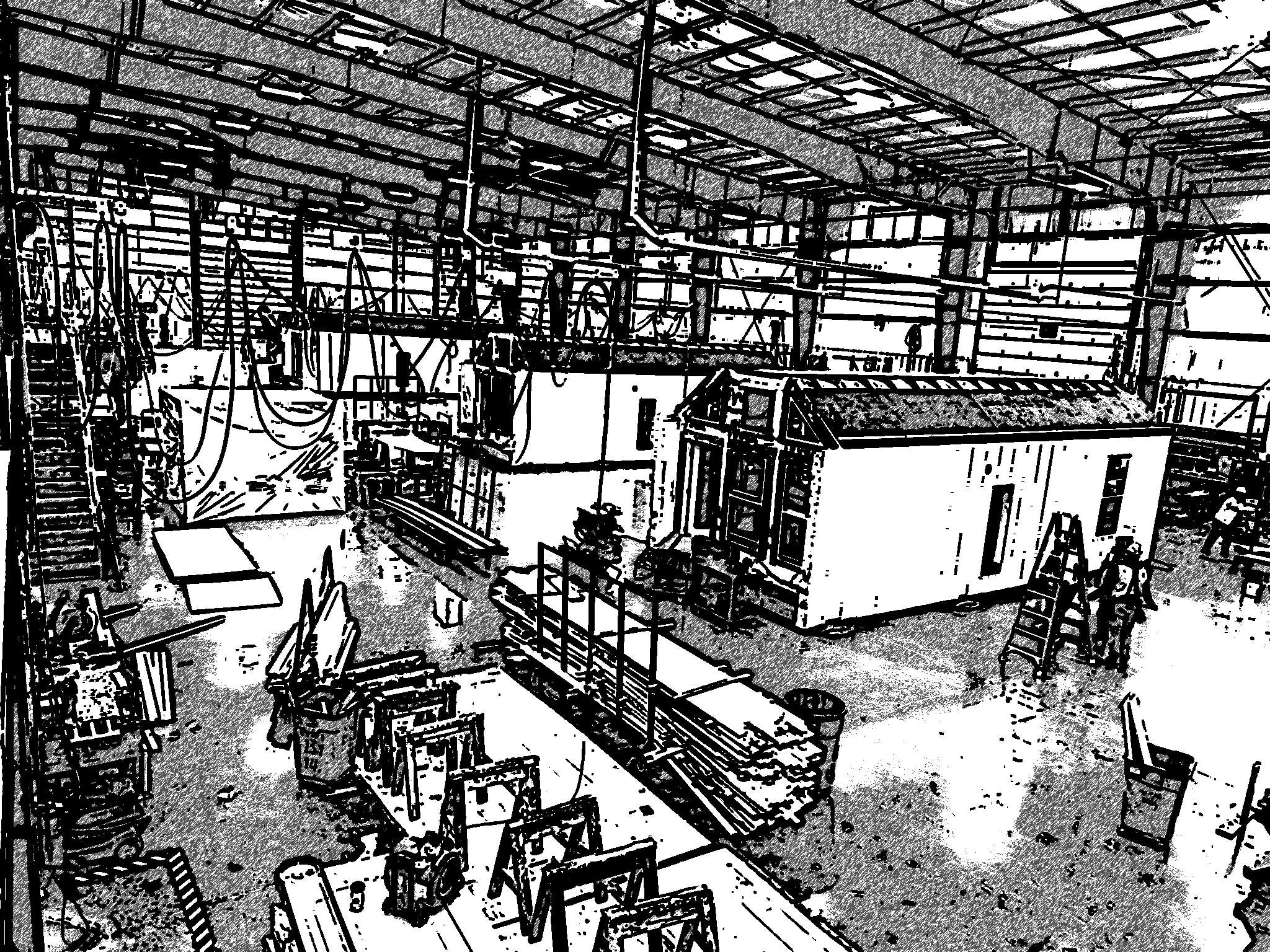
With refugee mega-camps set up beside borders globally, and New York bracing for yet another record-breaking heatwave, the city is now facing the existentially daunting challenge of climate migration head-on. Modular housing is becoming one of the most important tools in meeting the challenge.
Over the past decades, modular housing has evolved from a temporary solution for displaced populations into an efficient and permanent cornerstone of American housing policy. Across the country, cities like Detroit, Cleveland, and rural areas of Maine, Ohio, and Texas have welcomed waves of migrants who are revitalizing these communities—and considering modest but stylish factory-built homes their affordable piece of the American Dream. But while modular housing has provided solutions, it has also sparked debate.
One of the first major milestones for the new modular housing movement came in 2025 when Liv-Connected, a New York-based company co-founded by architect Jordan Rogove, secured a contract to build homes for FEMA in Florida following a catastrophic flood. This project used the Connexus System, in which components such as kitchens, bedrooms, and bathrooms snap together. They were pre-assembled in factories across the U.S. in just two days per house and shipped, allowing for assembly in another 2 days.
From Temporary Solution to Permanent Infrastructure
The early 2020s were a period of immense strain on urban centers like New York, which were overwhelmed by an influx of immigrants and asylum seekers, many sent from the bordering states in a cynical driving of the news cycle. Cities were soon thrown into full-blown crisis, scrambling to find temporary housing. DXA, Rogove’s firm. had already built shelters for disasters in Haiti, and was soon building massive tents on Randall’s Island and Floyd Bennett Field to house the asylum seekers. Due to the broken housing dynamics of the time, with the high cost of land and regulations making it easy to shut down projects, the inefficient and often unsafe tents became semi-permanent, illustrating the short-sightedness of an earlier moment.
“We knew we had the technology to help,” says Rogove. “But at the time, only the tents were realistic, because due to their temporary nature, they could skirt regulations.”
We knew we had the technology to help. But at the time, only the tents were realistic, because due to their temporary nature, they could skirt regulations.
Jordan lobbied Congress to change building regulations so that modular houses could pass inspection right out of the factory, decreasing the costs associated with building a home and bringing the tidy structures within reach of many more American families—including immigrants.
By the early 2030’s, Liv-Connected’s modular cartridges became a staple in rural areas and smaller cities that had been losing population.

 By the early 2030’s, Liv-Connected’s modular cartridges became a staple in rural areas and smaller cities that had been losing population.
Photograph provided by Liv-Connected, digitally processed by Noah Fischer.
Expansion and Growing Tensions with Trade Unions

Modular housing has a long history in the US–they were shipped from New York to California during the Gold Rush, and an English house was even recorded being shipped to the colony in the 18th century. Double-wide trailers became widespread in the housing crisis of the early 1970s. At the time, HUD built hundreds of thousands, but then the economy changed, and modular houses lost their sheen. It took until the late 2020s for Liv-Connected’s updated vision of modular cartridge housing to gain momentum, and it continued throughout the 2030s. Its reach began to extend beyond rural areas and disaster zones.
More recently, modular units started popping up in urban developments too, from stacked units atop brownstones in Brooklyn to full modular neighborhoods in Austin. This rapid expansion sparked friction with trade unions, especially in the construction sector.
Ray Morales, a spokesperson for the Carpenters’ Union in New York, expressed concern: “At first, these modular units were filling gaps—helping deliver prices where traditional construction couldn’t keep up. But now that people desire them, we’re seeing more direct competition with site-built homes. These units arrive pre-built, reducing the need for on-site workers like carpenters and plumbers.”
I used to work outside on construction sites, all day balancing on a cold roof. Now I'm in a climate-controlled factory, working in a safer environment. A lot of people here are immigrants, like me, and we're bringing our families into the workforce.
As modular homes became more sophisticated and began to meet higher-end housing needs, the tensions rose. However, Liv-Connected and other modular housing companies were quick to emphasize that they were creating jobs, not eliminating them—just in different sectors. Factories that assembled modular units, like Fading West in Colorado and Guerdon in Idaho, employed hundreds of workers, many of them immigrants. These workers enjoyed safer conditions and more predictable hours than those in traditional construction, and they were part of a growing workforce trained in modern construction techniques. Five years ago, Fading West workers unionized.
Carlos Ramirez, a supervisor at Fading West, shared his perspective: “I used to work outside on construction sites, all day balancing on a cold roof. Now I’m in a climate-controlled factory, working in a safer environment. The pay is good, and the work is steady. A lot of people here are immigrants, like me, and we’re bringing our families into the workforce. And now that we’re protected by the union, it’s a win-win for the company and us.”
Navigating Red Tape and Regulatory Shifts
Despite the success of modular housing in addressing the growing need for affordable homes, regulatory hurdles have persisted. Liv-Connected faced challenges early on, as modular units had to meet the same stringent building codes as traditional homes, adding time and cost to their projects.
“We were able to build these homes quickly, but the regulatory process slowed everything down and brought prices up,” said Rogove. “Most of the challenges we’ve faced have been about bringing the rules up to speed with the times.”
Homeowners like Rhea Butterworth in wealthy enclaves of Westchester complain about the 'fast-food effect' on village aesthetics, as single-family regulations loosen, and carriage housing has popped up in every large backyard.
In the early 2030s, Dan Goldman’s appointment to head up HUD played a key role in pushing through the new regulations, which allowed for modular homes to be pre-approved if the zoning was in place, removing the need for piecemeal approvals for each unit.
Not everyone was on board. Tom Gallagher, a former site-based contractor turned critic, argued that the loosening of regulations favored big companies like Liv-Connected at the expense of local builders. “These factory-built homes don’t require the same level of on-site expertise, and that’s putting people in danger.”
Meanwhile, homeowners like Rhea Butterworth in wealthy enclaves of Westchester complain about the “fast-food effect” on village aesthetics, as single-family regulations loosen, and carriage housing has popped up in every large backyard. While the modular units themselves are cost-effective and sustainable—producing less than 10% of the waste of traditional construction—critics from the Left pointed out that the homes, though energy-efficient and well-insulated, still required significant upfront investment to build and deploy at scale. These groups are calling for the government to provide units as land trusts and as rental units pegged to 15% of incomes.
Rogove agrees. “We’re selling lots of them to the government at a discount,” he says. We’re supplying the land trust villages being built as we speak. These beautiful homes will become permanent affordable housing, and they’re passive house certified.