




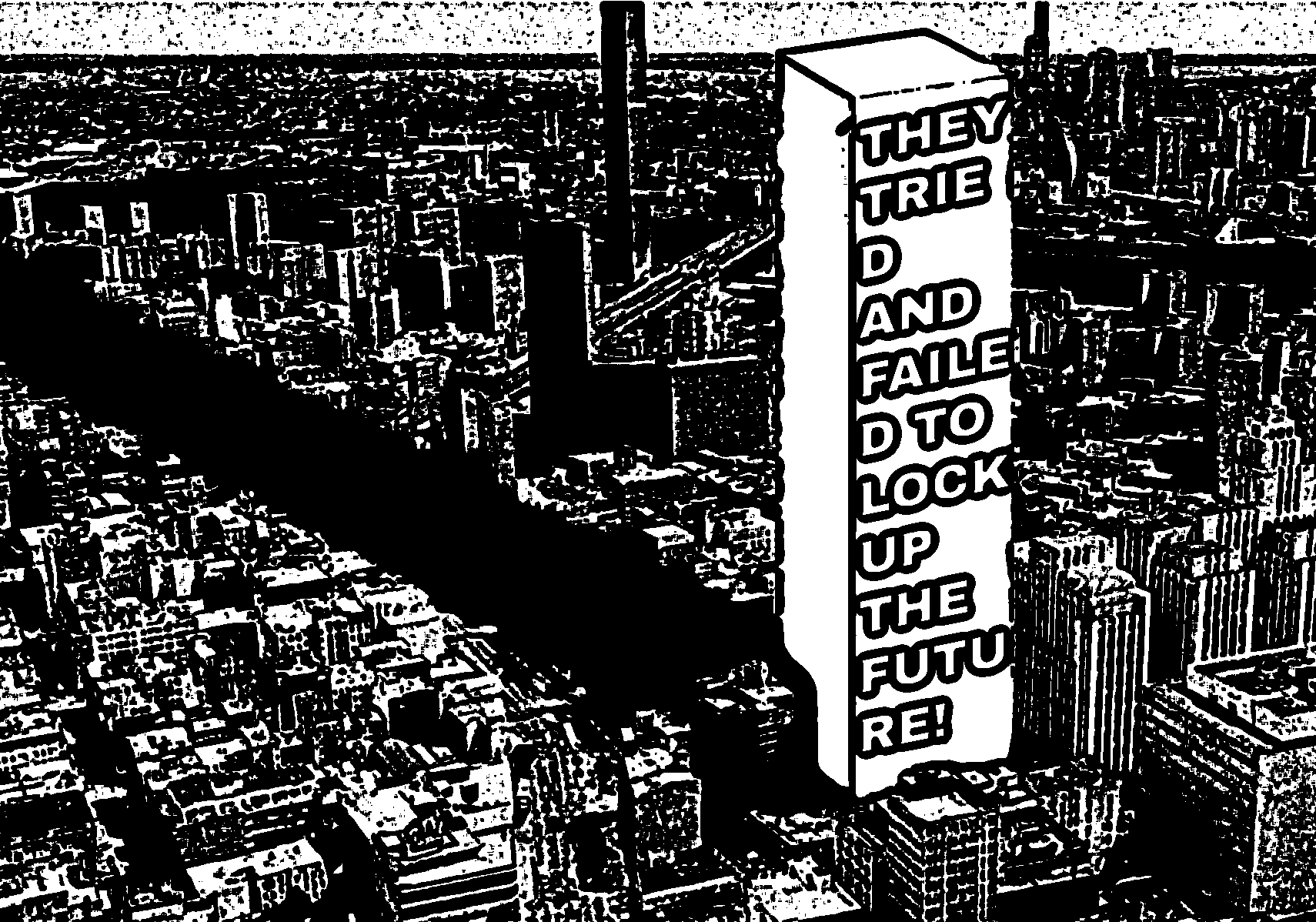
Inmates Secure Victory After Month-Long Protest, City Announces Plans for Transformative Re-Use
In a groundbreaking move, New York City has agreed to permanently close the infamous “jailscraper” in Chinatown, following a month-long hunger strike by inmates that brought national attention to the facility’s deplorable conditions. The city will convert the imposing high-rise into supportive housing units, marking a significant policy shift—a shift forced by decades of protest, culminating in a hunger strike.
The hunger strike, which began on May 1st, 2044, shone a spotlight on the jailscraper’s harsh realities.”It was all shiny steel and glass and mural-skins from the outside,” stated Tyree Williams, one of the leading hunger strikers, “but inside, it was like living in a nightmare.” Many inmates reported inadequate heating and air conditioning, with the city’s cost-cutting measures leading to the replacement of correctional officers with malfunctioning robotic assistants for food service and basic checks. These robots, plagued by glitches and software bugs, often failed to deliver meals, leaving inmates hungry and frustrated.
This victory culminates over two decades of the Black and Asian solidarity movement. Both inside and outside the prison system, these groups have relentlessly protested the jailscraper’s existence since its controversial construction in the late 2020s. Last year, a more radical faction within these groups, known as the Phantom Abolitionists, managed to stage a daring escape for three inmates locked up in the tower and hack into the NYPD’s supposedly impenetrable computer system, exposing security vulnerabilities and highlighting the facility’s inherent flaws.
"It was all shiny steel and glass and mural-skins from the outside," stated Tyree Williams, one of the leading hunger strikers, "but inside, it was like living in a nightmare."
Supportive Housing, But Questions Remain
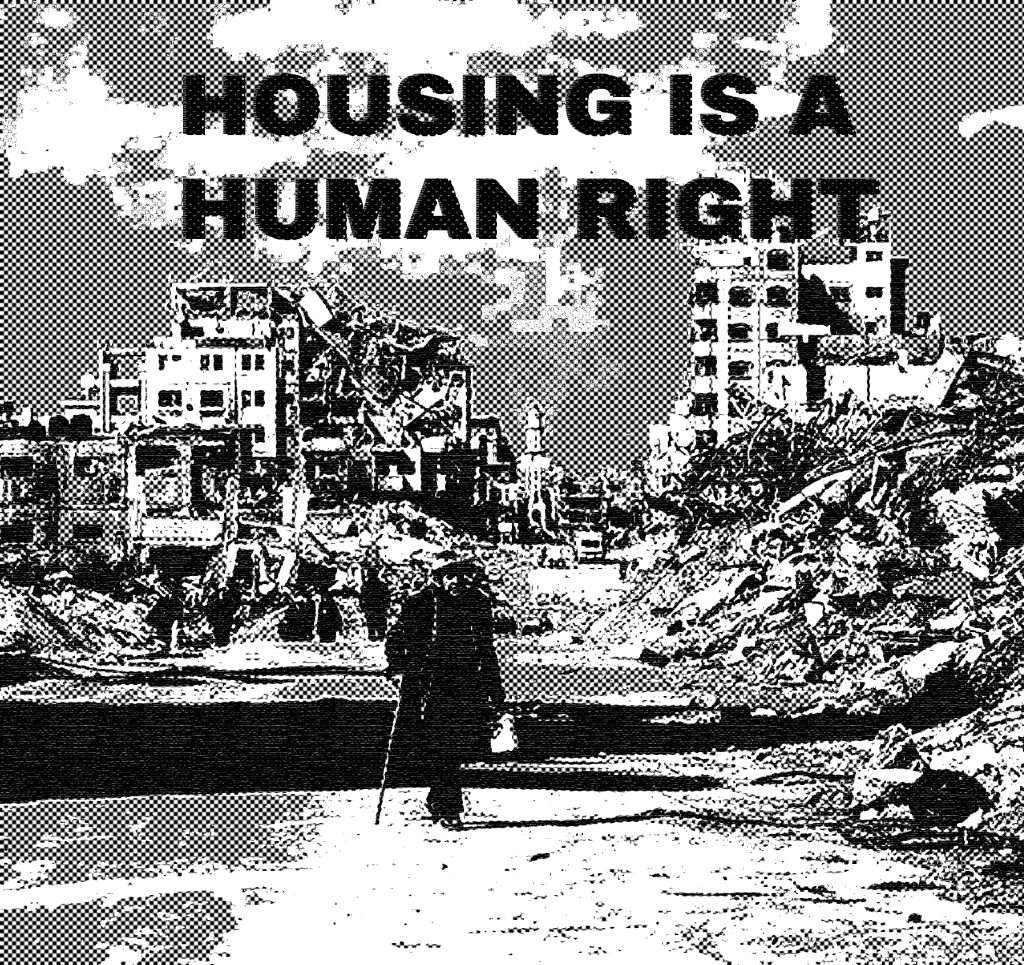
The Mayor Nurses’ plan for the repurposed facility centers around creating supportive housing units for individuals struggling with addiction, mental health challenges, the elderly, and those experiencing homelessness.
Last year, a more radical faction within these groups, known as the Phantom Abolitionists, managed to stage a daring escape for three inmates locked up in the tower and hack into the NYPD's supposedly impenetrable computer system, exposing security vulnerabilities and highlighting the facility's inherent flaws.
While some residents welcome the move, concerns linger. “Sure, the conditions were terrible in there,” says Henry Cheng, who owns a bakery across the street from the jailscraper, “but putting those struggling with addiction right next to families and kids? I don’t know about that.”
Local community board member Maria Rodriguez echoes these concerns. “We need to support our most vulnerable, but we also need to ensure the safety of our existing residents. The city needs to have a comprehensive plan for social services and security measures in place before anyone moves in.”
A Deeper Fight
"Our fight against the city's displacement of working-class residents is the same as the fight against this jail," she argues. "Both are fueled by the same system that profits off mass incarceration and the marginalization of communities of color."
“The jailscraper has been a highly visible symbol of a broken carceral system for too long, and frankly, we should never have built it,” confided a veteran city official who spoke on condition of anonymity. Longtime Chinatown activist Betty Yu sees a deeper connection between the fight against the jailscraper and the ongoing struggle for affordable housing in Chinatown. “Our fight against the city’s displacement of working-class residents is the same as the fight against this jail,” she argues. “Both are fueled by the same system that profits off mass incarceration and the marginalization of communities of color.” Yu believes this victory demonstrates the power of abolitionist movements that go beyond simply ending incarceration, but rather focus on reallocating resources towards building a more just and supportive society.
From the Archive
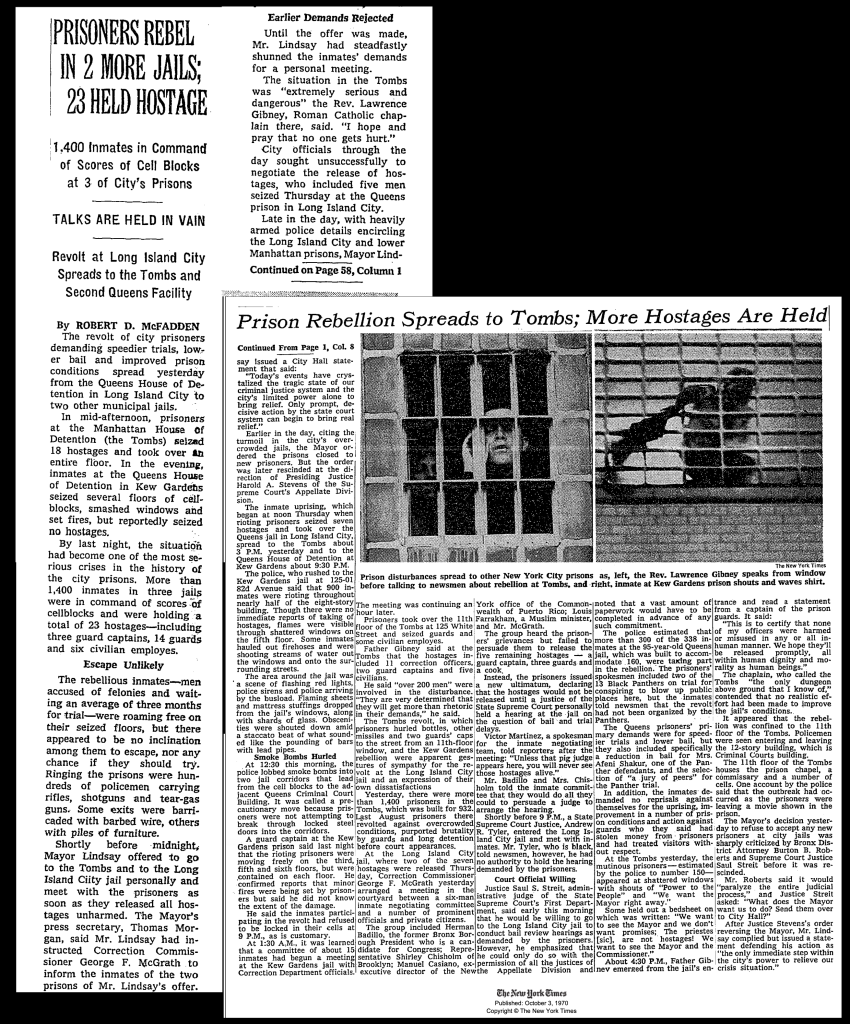
PRISONERS REBEL IN 2 MORE JAILS; 23 HELD HOSTAGE
The jail that defined carceral failure in lower Manhattan for two centuries stood within blocks of Chinatown. The 2044 hunger strike is the latest episode in a documented cycle — uprising, promised reform, rebuilt symbol — stretching back to 1838.
By last night, the situation had become one of the most se rious crises in the history of the city prisons. More than 1,400 inmates in three jails were in command of scores of cellblocks and were holding a total of 23 hostages—including three guard captains, 14 guards and six civilian employes.
Escape Unlikely
The rebellious inmates—men accused of felonies and wait ing an average of three months for trial—were roaming free on their seized floors, but there appeared to be no inclination among them to escape, nor any chance if they should try. Ringing the prisons were hun dreds of policemen carrying rifles, shotguns and tear‐gas guns. Some exits were barri caded with barbed wire, others with piles of furniture.
Advertisement
SKIP ADVERTISEMENT
Shortly before midnight, Mayor Lindsay offered to go to the Tombs and to the Long Island Ciity jail personally and meet with the prisoners as soon as they released all hos tages unharmed. The Mayor's press secretary, Thomas Mor gan, said Mr. Lindsay had in structed Correction Commis sioner George F. McGrath to inform the inmates of the two prisons of Mr. Lindsay's offer.
Earlier Demands Rejected
Until the offer was made, Mr. Lindsay had steadfastly shunned the inmates' demands for a personal meeting.
The situation in the Tombs was “extremely serious and dangerous” the Rev. Lawrence Gibney, Roman Catholic chap lain there, said. “I hope and pray that no one gets hurt.”
City officials through the day sought unsuccessfully to negotiate the release of hos tages, who included five men seized Thursday at the Queens prison in Long Island City.
Late in the day, with heavily armed police details encircling the Long Island City and lower Manhattan prisons, Mayor Lindsay Issued a City Hall state ment that said:
“Today's events have crys talized the tragic state of our criminal justice system and the city's limited power alone to bring relief. Only prompt, de cisive action by the state court system can begin to bring real relief.”
Editors’ Picks
What Does Judaism Look Like Without Zionism?
My Fiancé’s Mother Is Out of Control. Does She Have to Come to the Wedding?
Unmissable New Thriller Novels
SKIP ADVERTISEMENT
Advertisement
SKIP ADVERTISEMENT
Earlier in the day, citing the turmoil in the city's over crowded jails, the Mayor or dered the prisons closed to new prisoners. But the order was later rescinded at the di rection of Presiding Justice Harold A. Stevens of the Su preme Court's Appellate Divi sion.
The inmate uprising, which began at noon Thursday when rioting prisoners seized seven hostages and took over the Queens jail in Long Island City, spread to the Tombs about 3 P.M. yesterday and to the Queens House of Detention at Kew Gardens about 9:30 P.M.
The police, who rushed to the Kew Gardens jail at 125‐01 82d Avenue said that 900 in mates were rioting throughout nearly half of the eight‐story building. Though there were no immediate reports of taking of hostages, flames were visible through shattered windows on the fifth floor. Some inmates hauled out firehoses and were shooting streams of water out the windows and onto the sur rounding streets.
The area around the jail was a scene of flashing red lights, police sirens and police arriving by the busload. Flaming sheets and mattress stuffings dropped from the jail's windows, along with shards of glass. Obsceni ties were shouted down amid a staccato beat of what sound ed like the pounding of bars with lead pipes.
Smoke Bombs Hurled
At 12:30 this morning, the police lobbed smoke bombs into two jail corridors that lead from the cell blocks to the ad jacent Queens Criminal Court Building. It was called a pre cautionary move because pris oners were not attempting to break through locked steel doors into the corridors.
Advertisement
SKIP ADVERTISEMENT
A guard captain at the Kew Gardens prison said last night that the rioting prisoners were moving freely on the third, fifth and sixth floors, but were contained on each floor. He confirmed reports that minor fires were being set by prison ers but said he did not know the extent of the damage.
He said the inmates partici pating in the revolt had refused to be locked in their cells at 9 P.M., as is customary.
At 1:30 A.M., it was learned that a committee of about 15 inmates had begun a meeting at the Kew Gardens jail with Correction Department officials.
The meeting was continuing an hour later.
Prisoners took over the 11th floor of the Tombs at 125 White Street and seized guards and some civilian employes.
Father Gibney said at the Tombs that the hostages in cluded 11 correction officers, two guard captains and five civilians.
Advertisement
SKIP ADVERTISEMENT
He said “over 200 men” were involved in the disturbance. “They are very determined that they will get more than rhetoric in their demands,” he said.
The Tombs revolt, in which prisoners hurled bottles, other missiles and two guards’ caps to the street from an 11th‐floor window, and the Kew Gardens rebellion were apparent ges tures of sympathy for the re volt at the Long Island City jail and an expression of their own dissatisfactions
Yesterday, there were more than 1,400 prisoners in the Tombs, which was built for 932. Last August prisoners there revolted against overcrowded conditions, purported brutality by guards and long detention before court appearances.
At the Long Island City jail, where two of the seven hostages were released Thurs day, Correction Commissioner George F. McGrath yesterday arranged a meeting in the courtyard between a six‐man inmate negotiating committee and a number of prominent officials and private citizens.
The group included Herman Badillo, the former Bronx Bor ough President who is a can didate for Congress; Repre sentative Shirley Chisholm of Brooklyn; Manuel Casiano, ex excutive director of the New
Advertisement
SKIP ADVERTISEMENT
York office of the Common wealth of Puerto Rico; Louis Farrakham, a Muslim minister, and Mr. McGrath.
The group heard the prison ers' grievances but failed to persuade them to release the five remaining hostages — a guard captain, three guards and a cook,
Instead, the prisoners issued a new ultimatum, declaring that the hostages would not be released until a justice of the State Supreme Court personally held a hearing at the jail on the question of bail and trial delays.
Victor Martinez, a spokesman for the inmate negotiating team, told reporters after the meeting: “Unless that pig judge appears here, you will never see those hostages alive.”
Mr. Badillo and Mrs. Chis holm told the inmate commit tee that they would do all they could to persuade a judge to arrange the hearing.
Advertisement
SKIP ADVERTISEMENT
Shortly before 9 P.M., a State Supreme Court Justice, Andrew R. Tyler, entered the Long Is land City jail and met with in mates. Mr. Tyler, who is black, told newsmen, however, he had no authority to hold the hearing demanded by the prisoners.
Court Official Willing
Justice Saul S. Streit, admin istrative judge of the State Supreme Court's First Depart ment, said early this morning that he would be willing to go to the Long Island City jail to conduct bail review hearings as demanded by the prisoners. However, he emphasized that he could only do so with the permission of all the justices of the Appellate Division and noted that a vast amount of paperwork would have to be completed in advance of any such commitment.
The police estimated that more than 300 of the 338 in mates at the 95‐year‐old Queens jail, which was built to accom modate 160, were taking part in the rebellion. The prisoners' spokesmen included two of the 13 Black Panthers on trial for conspiring to blow up public places here, but the inmates told newsmen that the revolt had not been organized by the Panthers.
The Queens prisoners' pri mary demands were for speed ier trials and lower bail, but they also included specifically a reduction in bail for Mrs. Afeni Shakur, one of the Pan ther defendants, and the selec tion of “a jury of peers” for the Panther trial.
In addition, the inmates de manded no reprisals against themselves for the uprising, im provement in a number of pris on conditions and action against guards who they said had stolen money from prisoners and had treated visitors with out respect.
Advertisement
SKIP ADVERTISEMENT
At the Tombs yesterday, the mutinous prisoners — estimated by the police to number 150— appeared at shattered windows with shouts of “Power to the People” and “We want the Mayor right away.”
Some held out a bedsheet on which was written: “We want to see the Mayor and we don't want promises; The priestes [sic], are not hostages! We want to see the Mayor and the Commissioner.”
About 4:30 P.M., Father Gib ney emerged from the jail's en trance and read a statement from a captain of the prison guards. It said:
“This is to certify that none of my officers were harmed or misused in any or all in human manner. We hope they'll be released promptly, all within human dignity and mo rality as human beings.”
The chaplain, who called the Tombs “the only dungeon above ground that I know of,” contended that no realistic ef fort had been made to improve the jail's conditions.
It appeared that the rebel lion was confined to the 11th floor of the Tombs. Policemen were seen entering and leaving the 12‐story building, which is Criminal Courts building.
Advertisement
SKIP ADVERTISEMENT
The 11th floor of the Tombs houses the prison chapel, a commissary and a number of cells. One account by the police said that the outbreak had oc curred as the prisoners were leaving a movie shown in the prison.
The Mayor's decision yester day to refuse to accept any new prisoners at city jails was sharply criticized by Bronx Dis trict Attorney Burton B. Rob erts and Supreme Court Justice Saul Streit before it was re scinded.
Mr. Roberts said it would “paralyze the entire judicial process,” and Justice Streit asked: “What does the Mayor want us to do? Send them over to City Hall?”
After Justice Stevens's order reversing the Mayor, Mr. Lind say complied but issued a state ment defending his action as “the only immediate step within the city's power to relieve our crisis situation.”